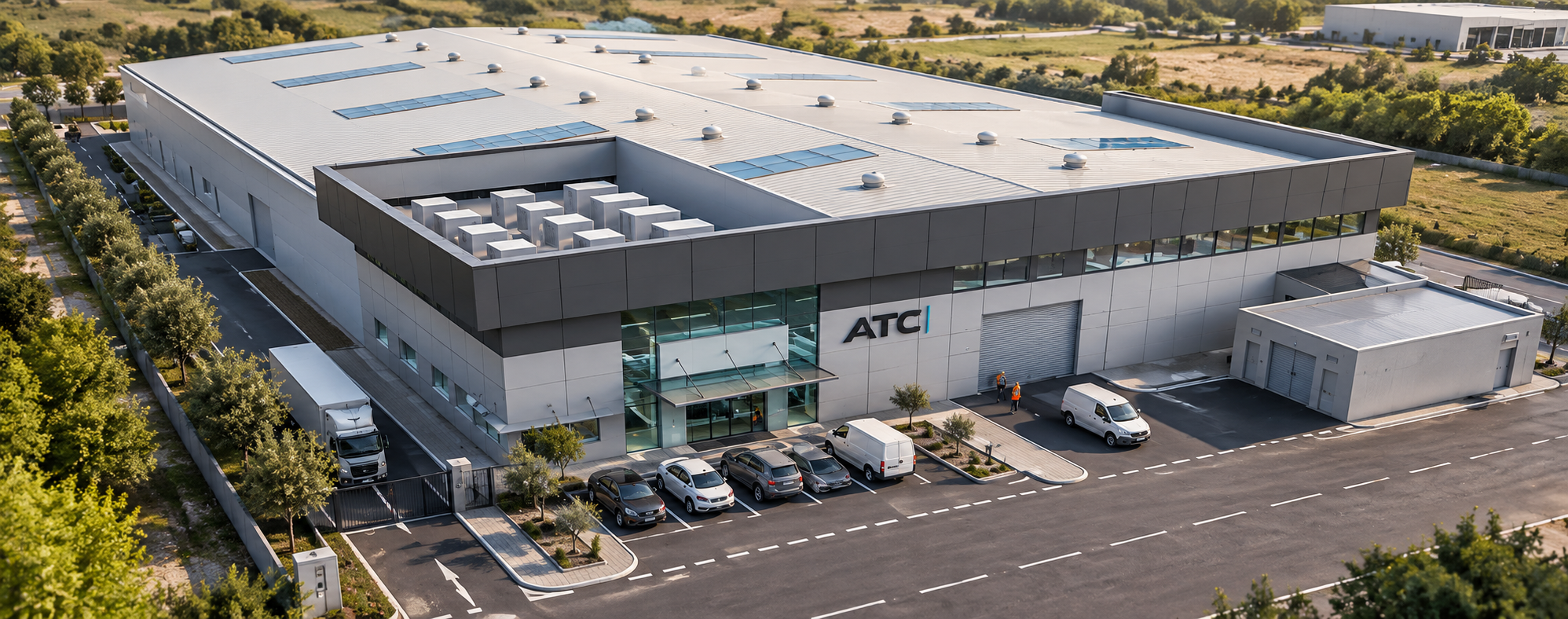
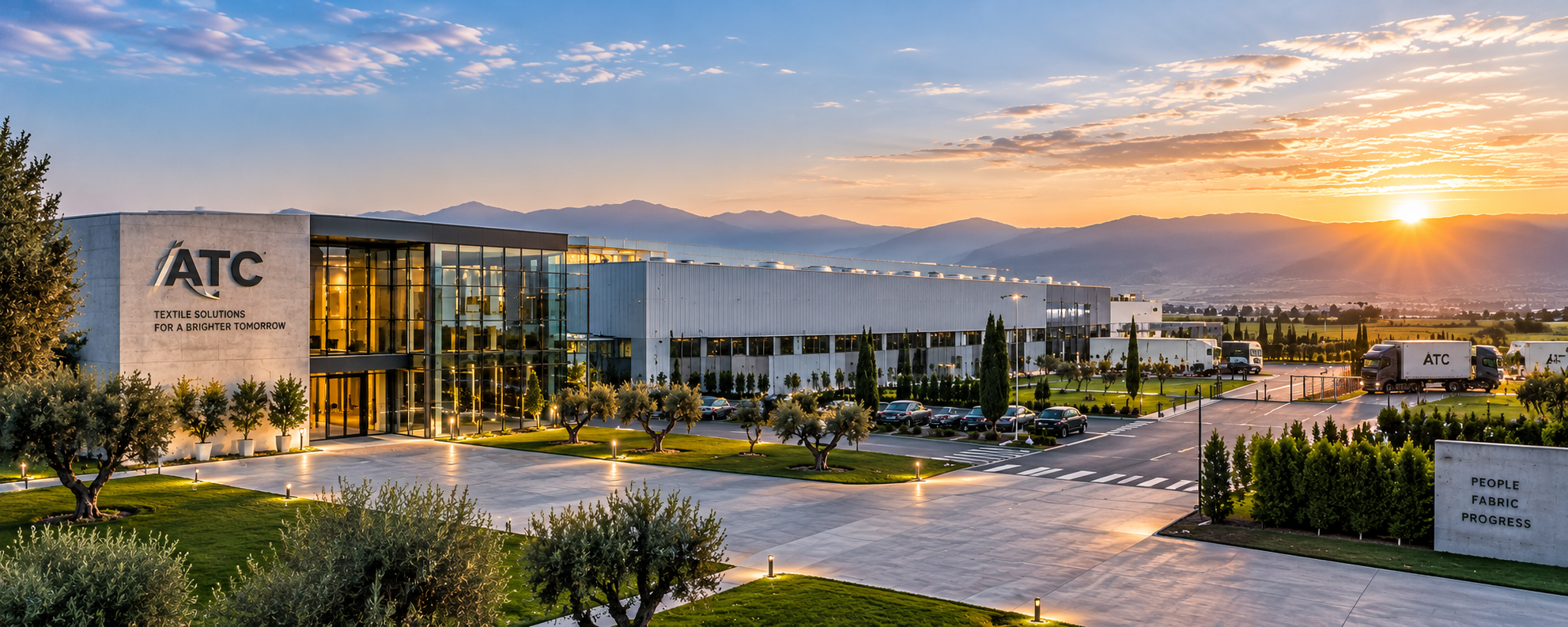
ATC – Albania Textile Cluster is a new business concept bringing together experienced industrial garment manufacturers within a single integrated production system.The Cluster will be owned by one or more partners with established experience in clothing manufacturing. Its activity is based on full-cycle garment production, using both customer-supplied materials and its own brand.
FIRST — Investment Efficiency
The project requires a significant initial investment, while its integrated and automated structure is designed to reduce operating costs and improve overall production efficiency.
SECOND — Approx. 7-Year Payback
Based on the project’s financial projections, the initial investment is expected to be fully recovered within approximately seven years.
THIRD — Contract-Based Production
Sales are supported by existing and future customer-material production contracts, providing defined production volumes and greater predictability.
FOURTH — Growing Market Demand
Demand for customer-material garment production continues to grow, supported by Albania’s competitive production costs and its proximity to European markets.
1.2 Experience of the Cluster Investors
The Cluster is established by one or more partners with proven experience in garment manufacturing and investment in related business activities. The partners bring extensive professional experience and a strong track record in the textile and garment industry.
1.3 Project Description
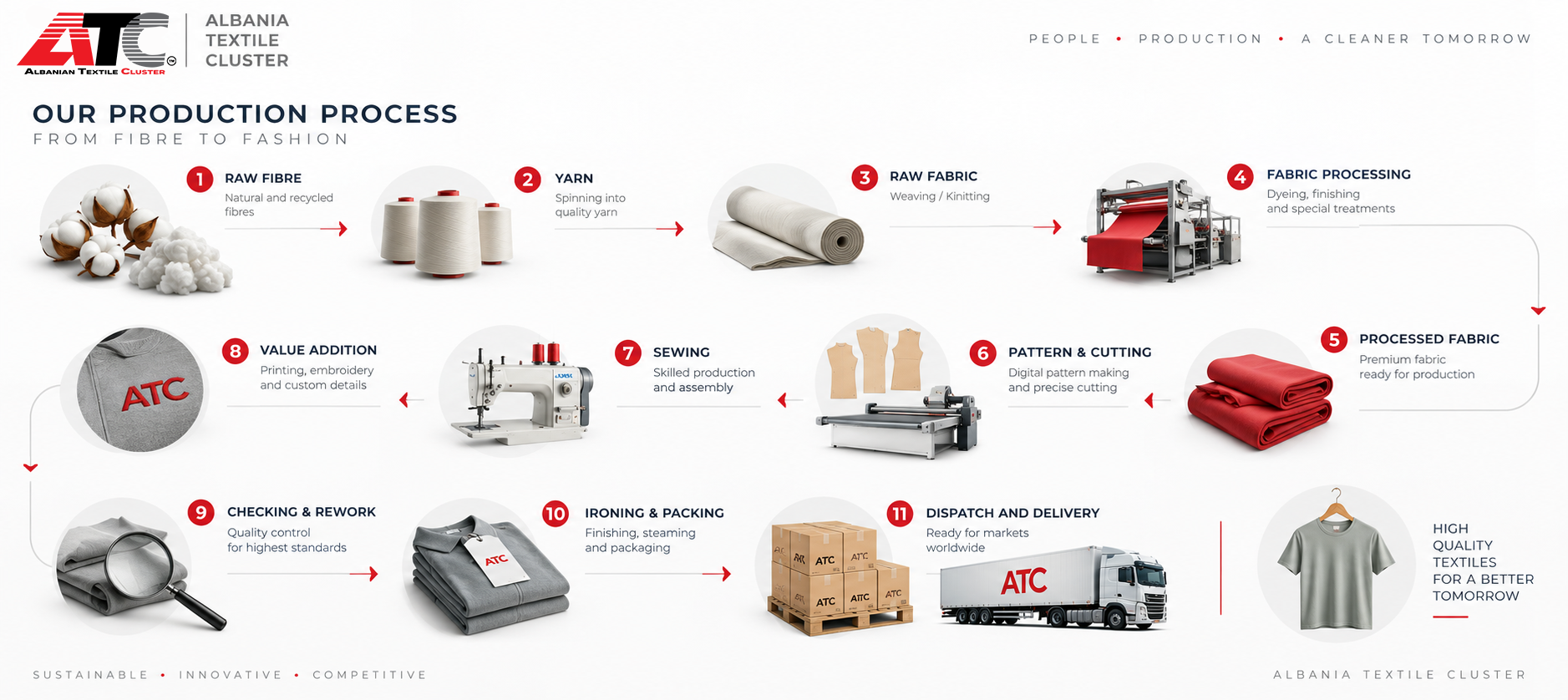
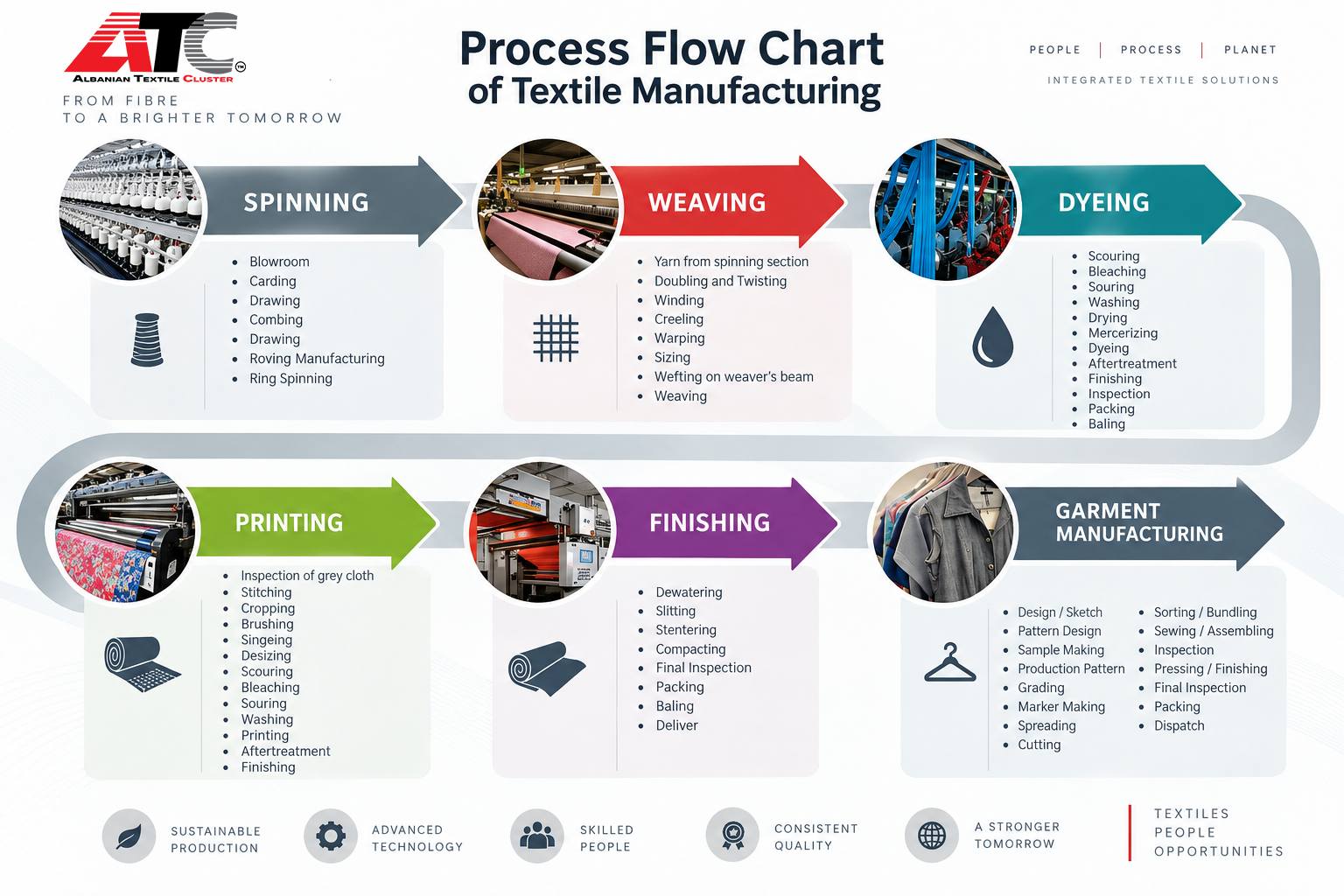
The project is based on the development of a fully integrated production cycle, from fabric manufacturing to the finished garment, together with the expansion and modernization of existing clothing production lines through investment in automated machinery and production processes.
Based on developments in the global textile industry, as well as on more than 30 years of experience in Albania’s market economy, the need to move towards local raw-material production and increasingly automated or semi-automated production technologies has become evident.
There are three main reasons:
First — Lower Production Costs
A centralized workflow combined with automated processes can significantly reduce production costs, particularly labor and energy costs.
Second — Adapting to a Changing Labor Market
The textile industry is facing an increasing shortage of labor, influenced by emigration and rising education levels. Fewer employees are choosing traditional textile-production jobs, making automation and specialization increasingly important for adapting to the changing labor market.
Third — Greater Competitiveness
Clustered and automated production reduces production times, enabling the companies within the Cluster to operate more efficiently and compete more effectively in international markets.
1.4 Legal Form of ATC
ATC will operate as a Textile Cluster whose activities include the production of raw materials and fabrics, as well as garment manufacturing using customer-supplied materials.
1.5 ATC Location
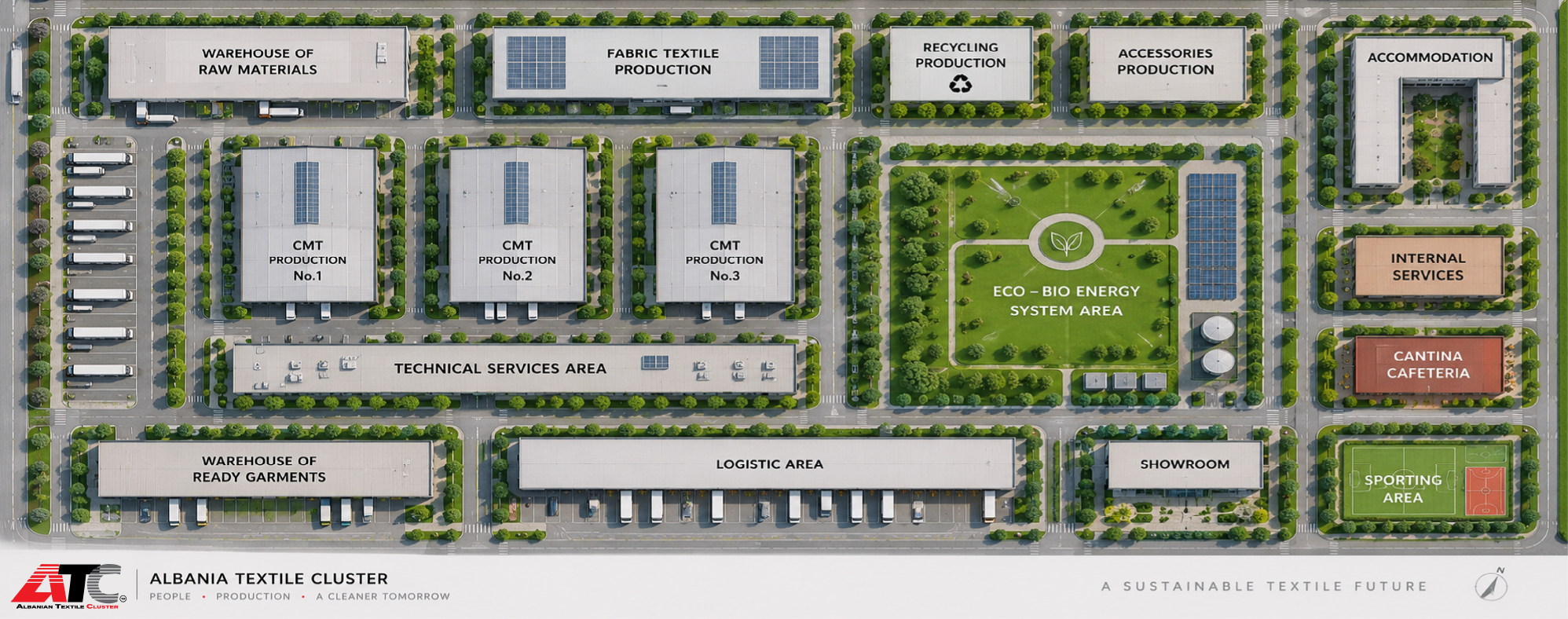
The project is planned for an area of approximately 150,000–200,000 m², providing sufficient space for production facilities as well as the technical, logistics and service areas required by the Cluster.
1.6 Employees and Work Organization
ATC is expected to employ approximately 2,000–3,000 permanent employees. One of the Cluster’s main policies will be to provide appropriate working conditions while supporting the continuous training and professional specialization of its workforce.
The workforce will include technical personnel, newly recruited employees and experienced workers from existing production lines. Employees with established experience in garment manufacturing will contribute their knowledge to the new integrated production structure, supported by long-term employment contracts.
2. MARKET ANALYSIS
2.1 Market Demand, Sector and Equipment
The ATC Textile Cluster is primarily designed to serve the production needs of garment manufacturers operating with customer-supplied materials. Its production capacity will be supported by existing contracts as well as new agreements, reflecting the growing demand from customers seeking production partnerships with ATC.
The procurement of machinery and key production equipment is supported by the experience of the Cluster’s principal shareholder and CEO, who is specialized in the trade of garment-production machinery. Several equipment proposals have already been obtained and will be evaluated according to the requirements and investment value of the project.
The planning and cost estimation of the required civil and installation works have also been completed.
2.2 Competition Analysis
Garment manufacturing with customer-supplied materials operates in a highly competitive market. Competitiveness depends primarily on four factors: fabric quality, garment quality, production time and production costs.
ATC is designed to address these factors through an integrated and centralized production structure, with the objective of achieving greater efficiency and strengthening its competitive position in the market.
The Cluster model also provides greater flexibility in managing workforce fluctuations compared with companies operating as independent production units.
2.3 Demand Trends
Demand for fabric and garment production has increased significantly in recent years. At the same time, production costs have risen in several countries in the region, including Romania, Bulgaria and North Macedonia, as well as in major textile-producing countries such as China, Bangladesh and Pakistan.
Albania combines relatively competitive production costs with close proximity to the European market, almost 30 years of cooperation with European companies and established experience in European production requirements.
These factors contribute to Albania’s attractiveness for European customers, particularly companies from Italy and Germany, which represent an important target market for the Cluster.
2.4 Marketing Plan
ATC’s marketing strategy is based on establishing long-term production agreements with different customers, selecting the most suitable offers while securing agreed production volumes and prices on an annual basis.
Combined with careful cost analysis, this contract-based approach is intended to provide greater predictability in production planning and expected profitability.
3. PROJECT INVESTMENT AND FINANCING
3.1 Total Project Cost
The investment includes machinery and production equipment, standardization, certification and professional training in accordance with EU standards and requirements, as well as the basic operational tools required for the Cluster.
3.2 Funding Sources
The project is proposed to be financed through financial and investment institutions.
The financing requirement is calculated on the investment value excluding VAT, based on the applicable VAT exemptions for equipment investment and export-oriented production.
3.3 Investment Repayment
The financed investment will be repaid according to the terms and repayment schedule established in the financing agreement.
Financing costs have been included among the expenses of the project’s financial activity and are reflected in the corresponding forecast tables.
4. FINANCIAL ASSESSMENT
4.1 Projected Income
During the first year of operation, ATC is expected to reach normal production capacity within approximately four months. The experience of the existing workforce and the companies involved in the project is expected to support a rapid start-up of production.
Average income has been calculated based on daily production volumes and average market prices for garment manufacturing, using the minimum projected monthly production volume as the basis of the forecast.
Higher production volumes are expected to increase profitability, as a significant proportion of operating costs remain fixed.
4.2 Projected Expenses
Project expenses are calculated on the basis of both indirect operating costs and direct production costs.
An additional reserve equivalent to 10% of total expenses has been included to cover financing costs and other unforeseen expenses.
4.3 Income and Expense Forecast
The projected income and expenses for the first three years of operation are presented in the corresponding financial statement.
Note: All costs and sales prices of finished products are calculated excluding VAT, based on current average market prices and projected cost trends. The profit and loss forecast has been prepared independently of potential market fluctuations.
5. PROJECT PROFITABILITY
Based on the project’s financial projections, the Net Present Value (NPV), calculated using a 10% cost of capital, indicates a projected investment payback period of approximately 7 years, with the initial investment expected to be fully recovered by the end of the seventh year.
Note: The NPV calculation is presented in the corresponding financial statement.
The Internal Rate of Return (IRR) for the 7-year period is calculated at 11.33%, based on the assumption that the investment is fully recovered within this period. By the end of the 10th year, the projected IRR increases to 16.08%.
Note: The IRR calculation is presented in the corresponding financial statement.
Based on the NPV and IRR projections, the investment is expected to achieve full payback within approximately 7 years.
The construction and implementation of the complete production system, up to full operational capacity, is planned to take approximately 6–9 months.
Reinvestment
In the 11th year of operation, ATC plans to reinvest an amount equivalent to 70% of the value of the machinery and equipment, with the objective of upgrading production technology, improving quality and increasing production efficiency.
6. SENSITIVITY ANALYSIS
Projected income from garment manufacturing is based on the Cluster’s estimated minimum production volume and the average prices offered by its customers.
The relatively large number of customers provides greater stability in production planning and revenue forecasts. At the same time, improvements in production efficiency and shorter delivery times are expected to strengthen ATC’s competitiveness and its capacity to serve larger markets requiring higher production volumes within shorter timeframes.
ATC also has the opportunity to develop production for the domestic market and to market its own products locally.
The project anticipates a gradual shift towards a hybrid production model, combining manufacturing for international customers with the development and production of ATC’s own brands.
7. SUPPLEMENTARY ANNEXES
7.1 Business Strengths and Weaknesses
7.1.1 Strengths
The main strengths of the project include:
7.1.2 Weaknesses
The project also identifies two principal challenges:
8. CONCLUSION
Based on the current market conditions, the project’s development prospects and the financial projections presented in this Business Plan, ATC is considered a sustainable and economically viable investment, with an estimated payback period of approximately 7 years.
The project combines the rapid development of an integrated production system with long-term industrial growth, improved employment conditions and salaries, and a positive contribution to the economic development of the area in which the Cluster will operate.
The projected financial performance is also expected to provide the capacity required to meet the investment’s financial obligations throughout its development and operation.
ATC – Albania Textile Cluster
Eng. Gjergji Gjika
CEO