Closing the Loop in Textile Production
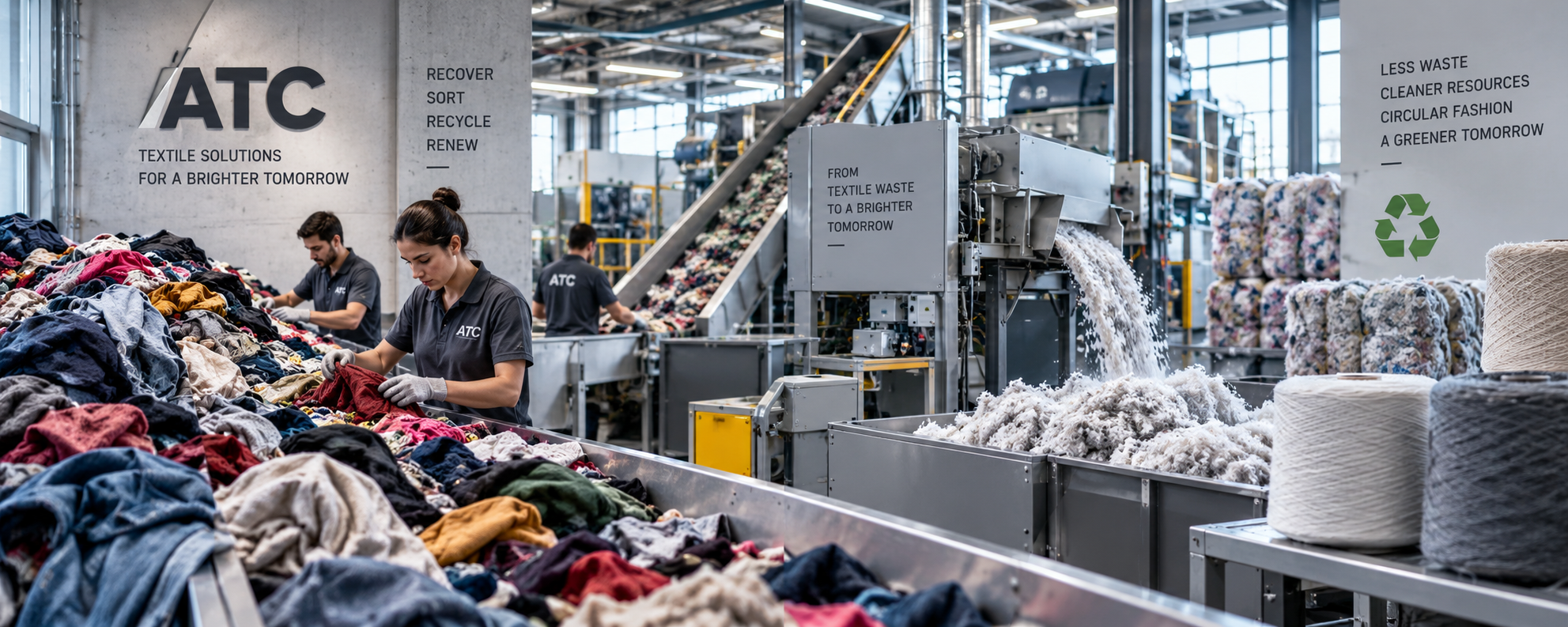
ATC Recycling is designed to bring textile waste back into the production cycle, transforming materials generated by garment manufacturing into resources for new textile products.
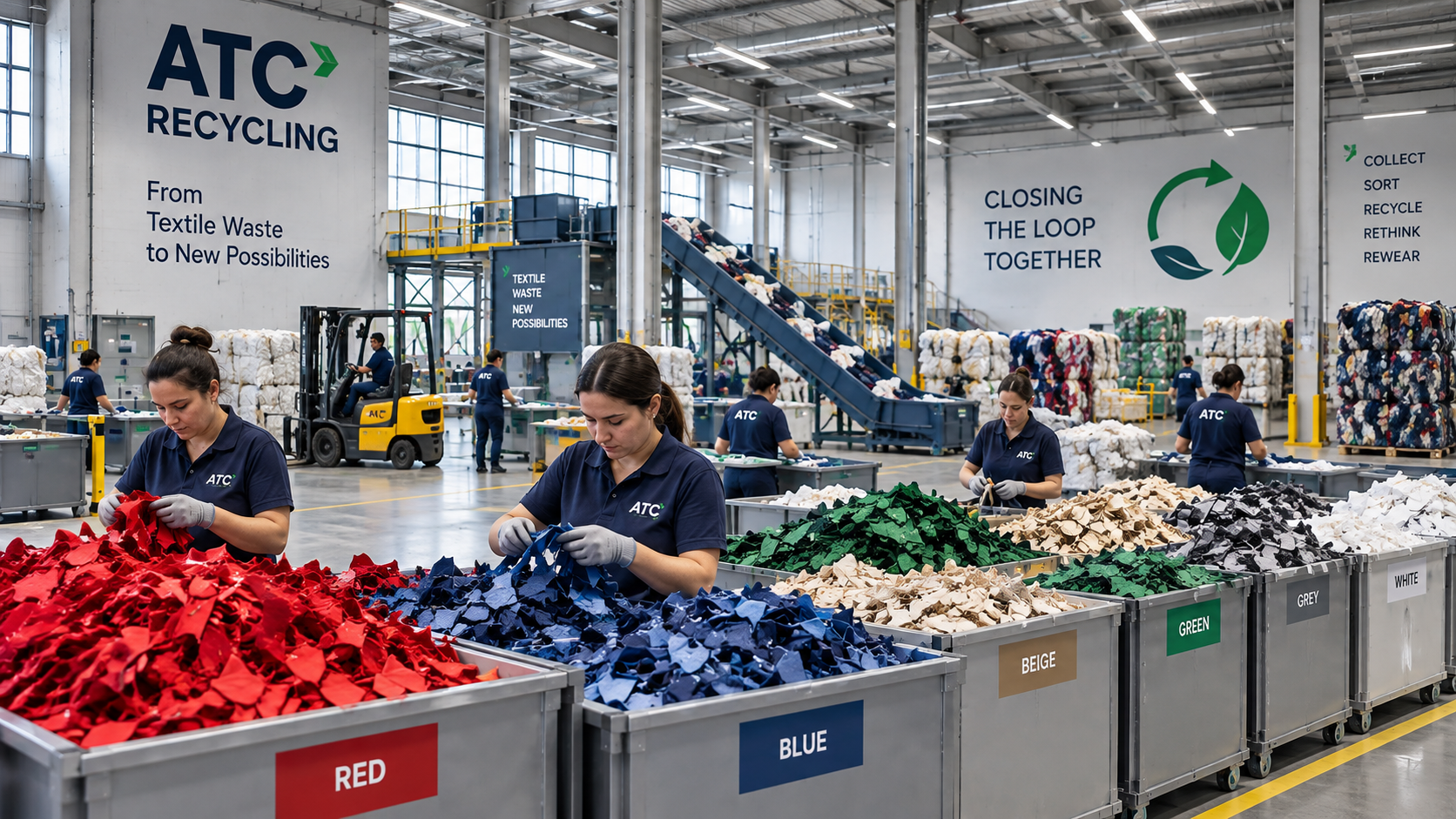
The process begins with the collection and sorting of cutting waste from CMT factories. Materials are separated by quality and colour before entering the recycling process, creating the starting point for a new production cycle.
By integrating recycling within the ATC ecosystem, textile waste can move directly from garment production back towards fibre, yarn, fabric and ultimately new garments — connecting production and recycling within the same industrial chain
From Textile Waste to Raw Material
The recycling cycle begins directly within garment production. Cutting waste generated by CMT factories is collected and prepared for reuse instead of leaving the textile production chain.
The material is then carefully sorted according to its composition, quality and colour. This separation is essential because it determines how the recovered fibres can be processed and used in the next stages of production.
Colour sorting also allows existing colour to become part of the recycled material itself, reducing the need for additional processing in later stages.
Recovering Fibres for a New Production Cycle
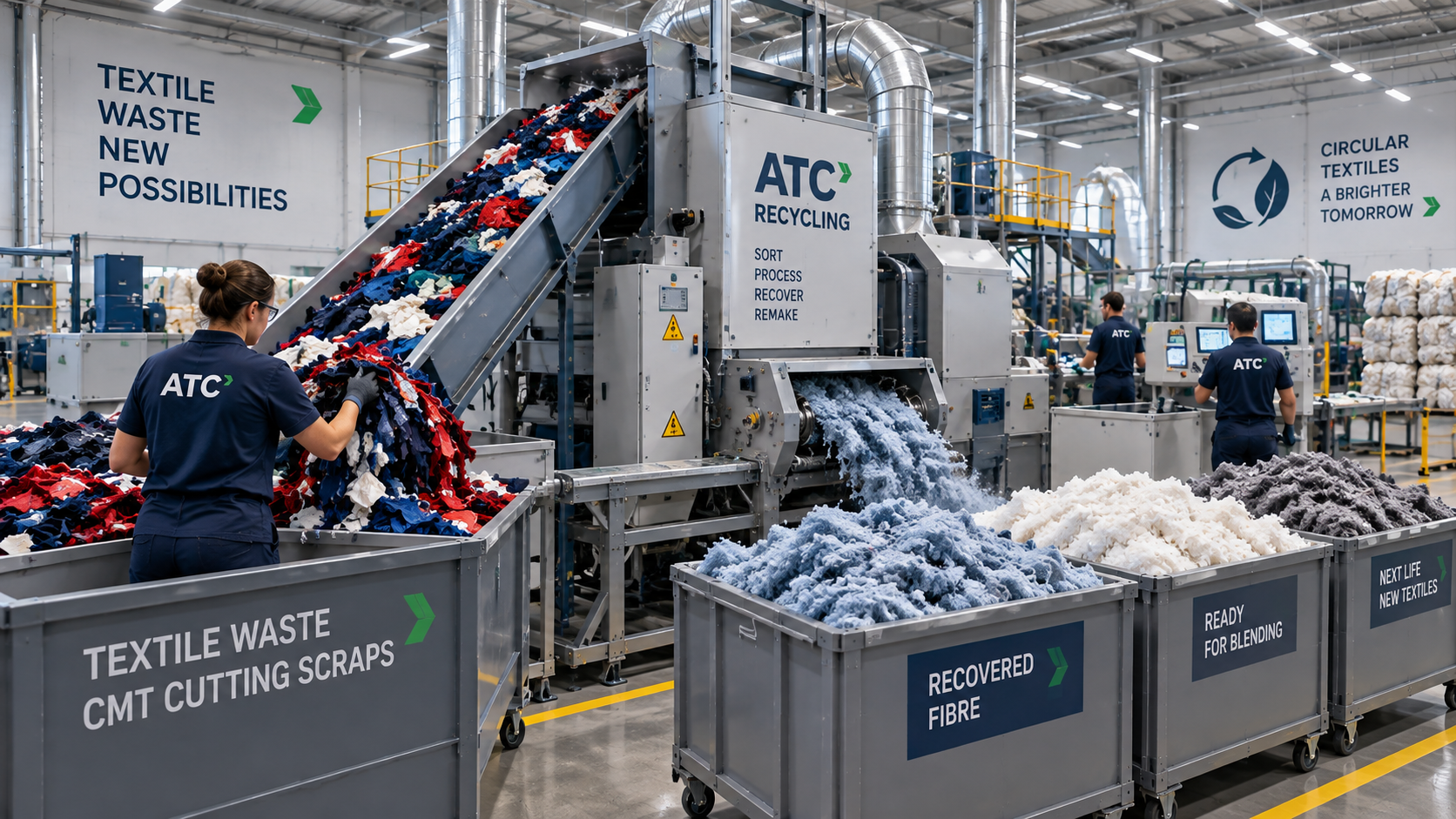
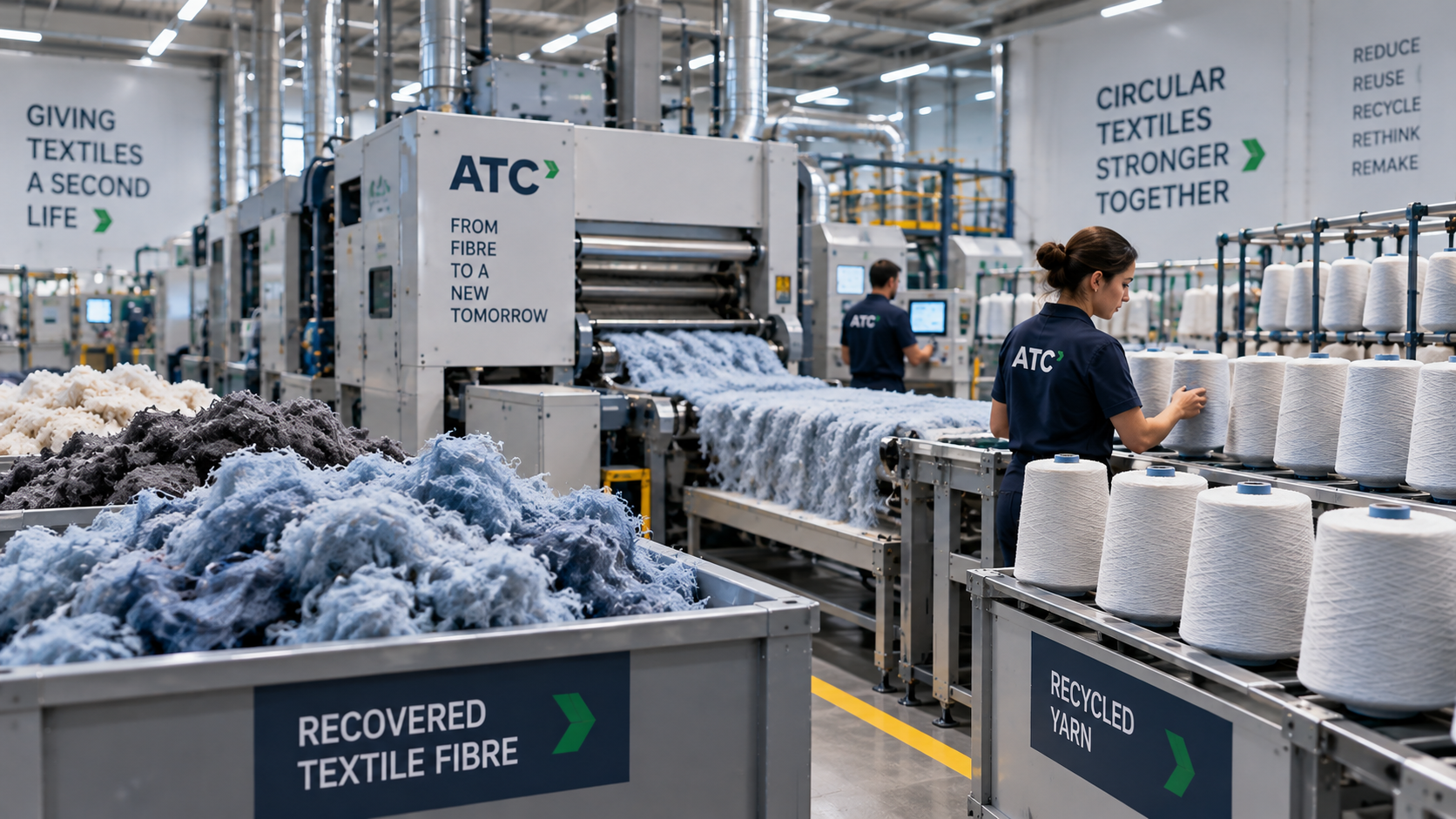
Once collected and sorted, textile waste enters the recycling process, where the material is prepared for transformation back into usable fibres.
ATC focuses on the recovery and reuse of textile materials as part of a circular production system. Through recycling, cutting waste can be processed into fibres that can re-enter textile manufacturing instead of being discarded.
These recovered fibres provide the basis for the next stages of the cycle — blending, spinning and the production of new yarns and fabrics.
From Recovered Fibre to New Yarn
Recovered textile fibres can be blended to create the material required for the next stage of production.
The prepared fibre then moves into the spinning process, where it is transformed into new yarn — bringing recycled material back into the textile manufacturing chain.
From here, the yarn can continue towards knitting or weaving, becoming the raw material for new fabrics and ultimately new garments.
From Recycled Yarn to New Fabric
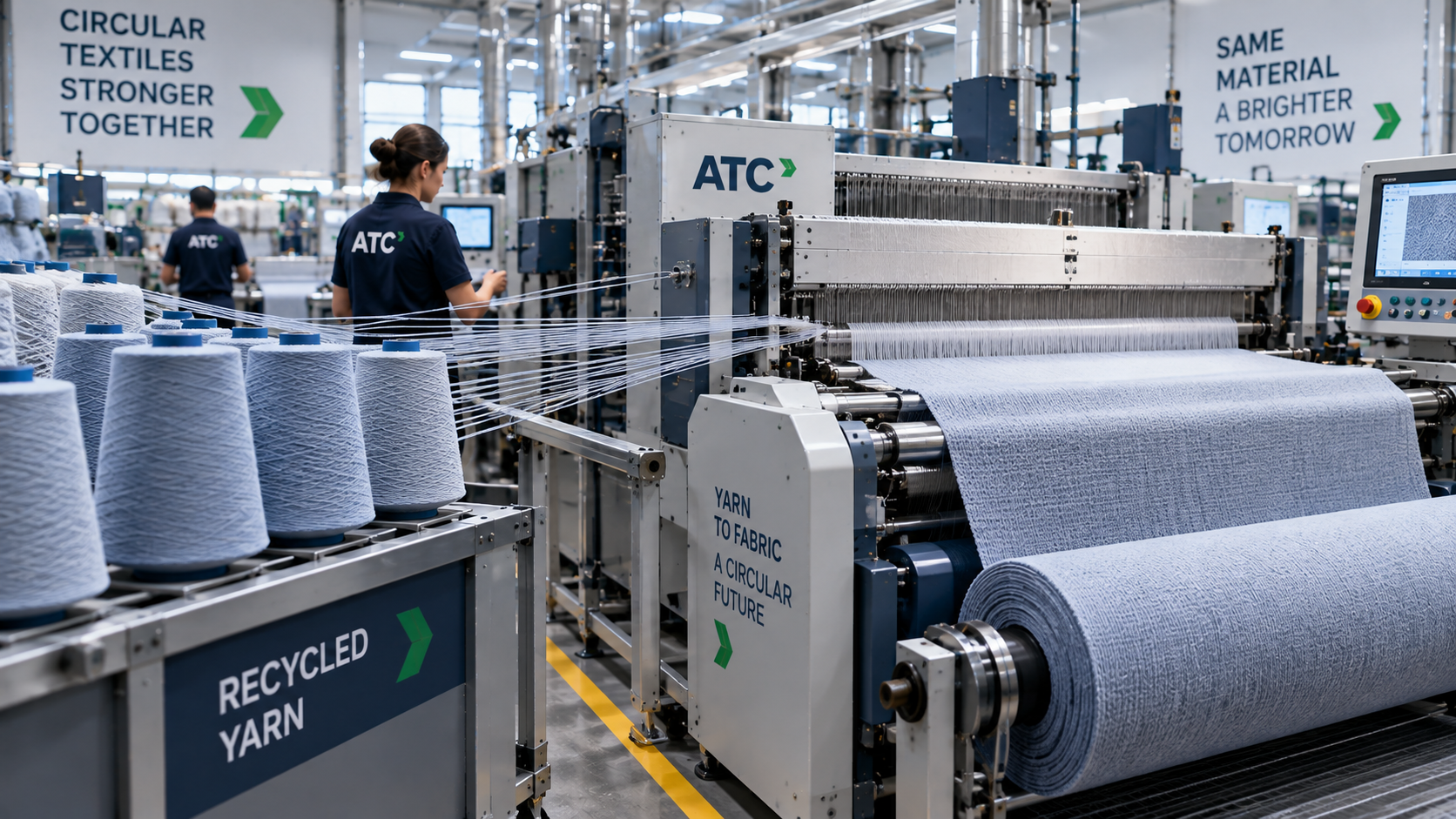
The recycled yarn can now return directly to textile production, where it is transformed into new fabric through knitting or weaving.
This stage reconnects recycling with the wider ATC manufacturing chain. Material that began as cutting waste is no longer treated as a residue of production — it has become a usable textile material once again.
The resulting fabric can then continue through the required finishing processes before returning to garment manufacturing.
Completing the Circular Production Cycle
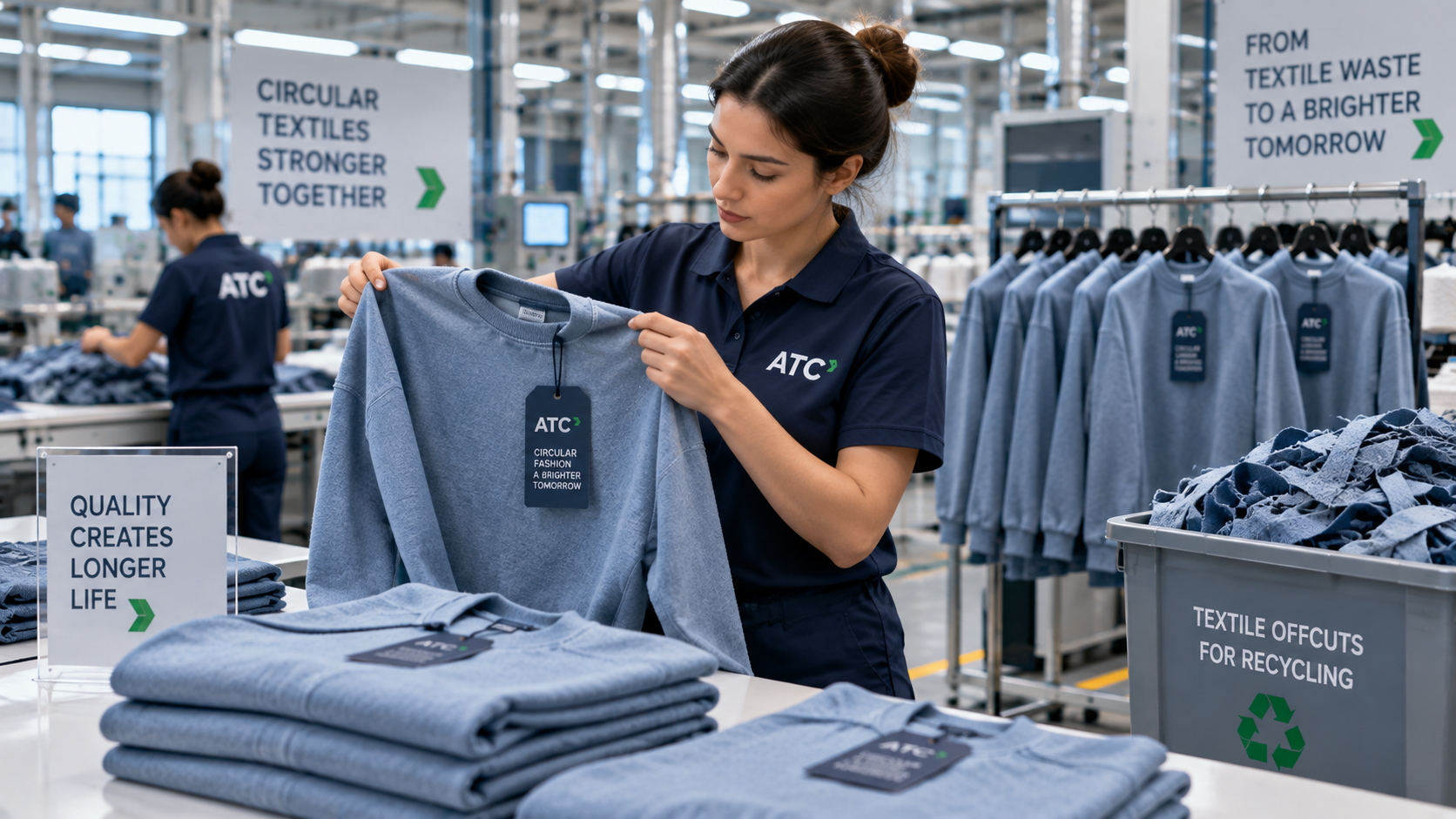
Once produced, recycled fabric can continue through the required finishing processes before returning to garment manufacturing.
Within the integrated ATC production chain, the material can move from recycled fibre to yarn, from yarn to fabric, and from fabric to a new finished garment.
In this way, textile waste generated during production becomes the starting point for a new product — closing the loop within the ATC ecosystem.