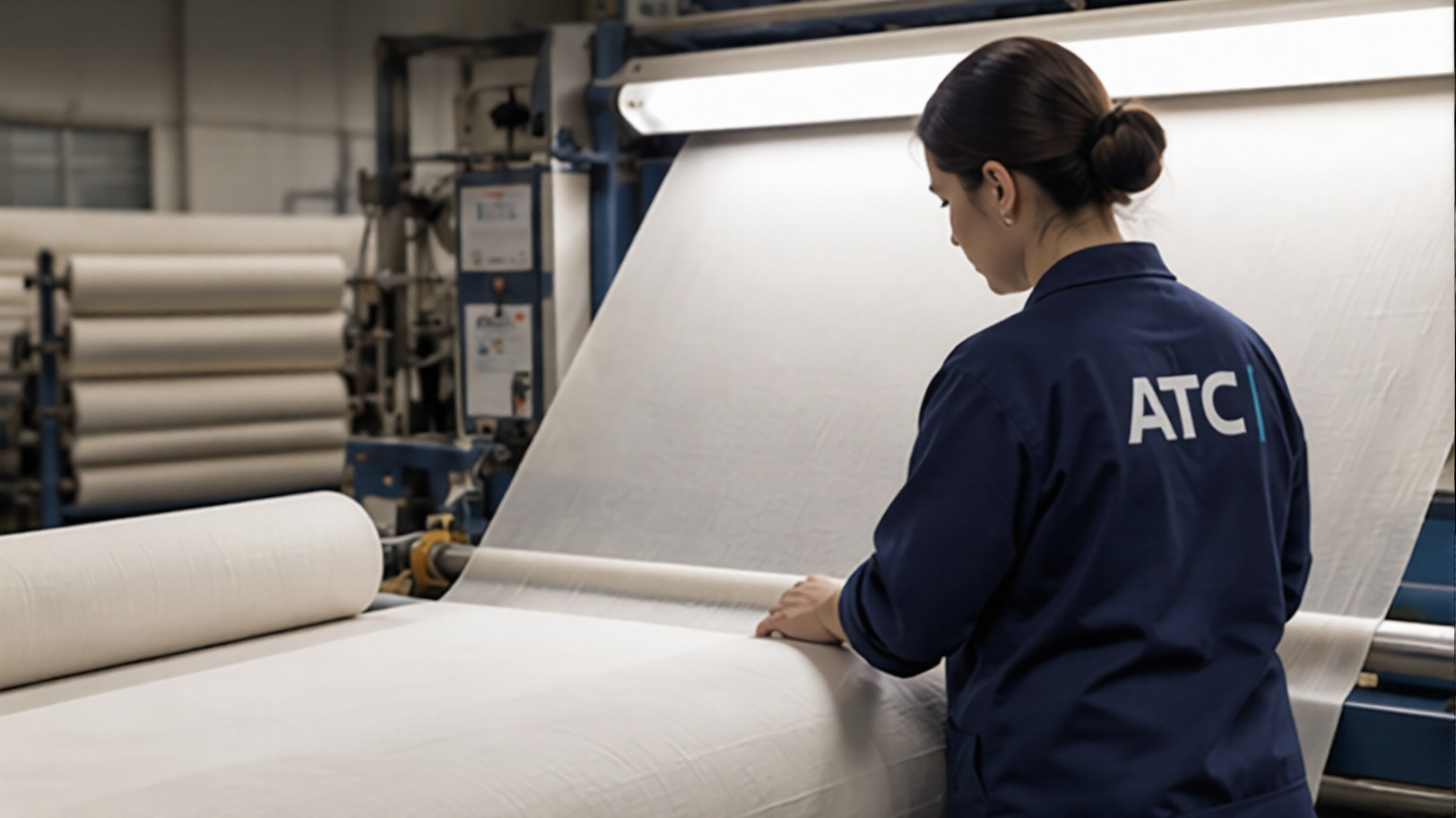

An Integrated Textile Supply Chain
ATC’s vision is to create an integrated supply chain for the Albanian and Balkan textile industry, providing high-quality and sustainable fabrics for CMT manufacturers.
By bringing fabric production closer to garment manufacturing, ATC aims to help CMT companies become more competitive, improve production efficiency and provide a better service to their customers.
From Yarn to Fabric
When the weft yarn crosses the warp yarns, fabric is created — a combination of raw-material quality, design creativity, technical structure and the experience of the weaver.
The weaving process consists of several stages: winding, warping, sizing, drawing-in, weaving and inspection of the greige fabric.
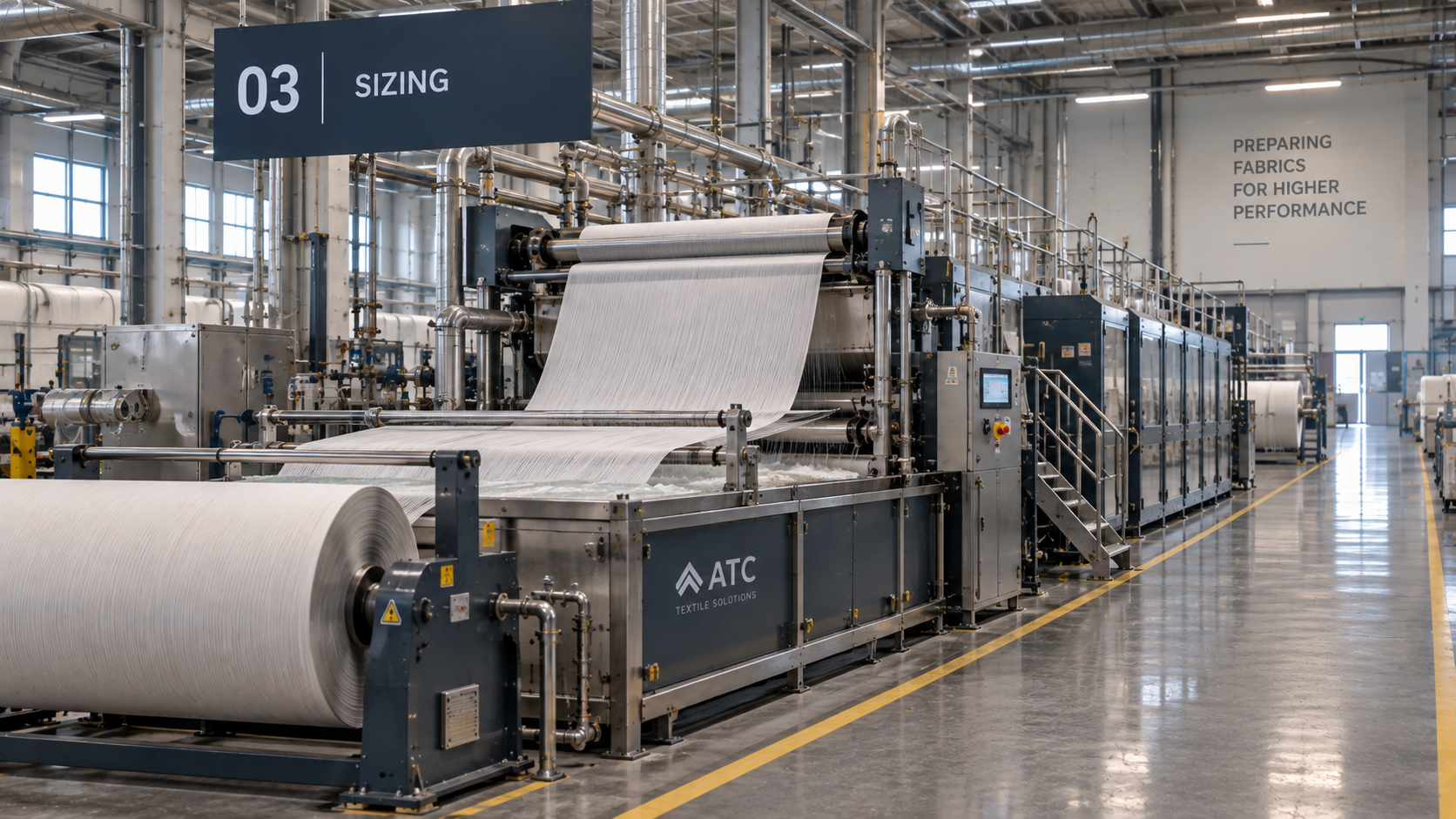
Winding is the process of preparing yarn on tubes or cones for the subsequent stages of weaving.
For the warp — the vertical threads of the fabric — yarn is prepared in cylindrical packages of equal length to minimize waste. Conical bobbins allow the yarn to unwind smoothly during processing.
When required for dyeing, yarn may also be wound into packages that allow the dye to penetrate evenly throughout the material.
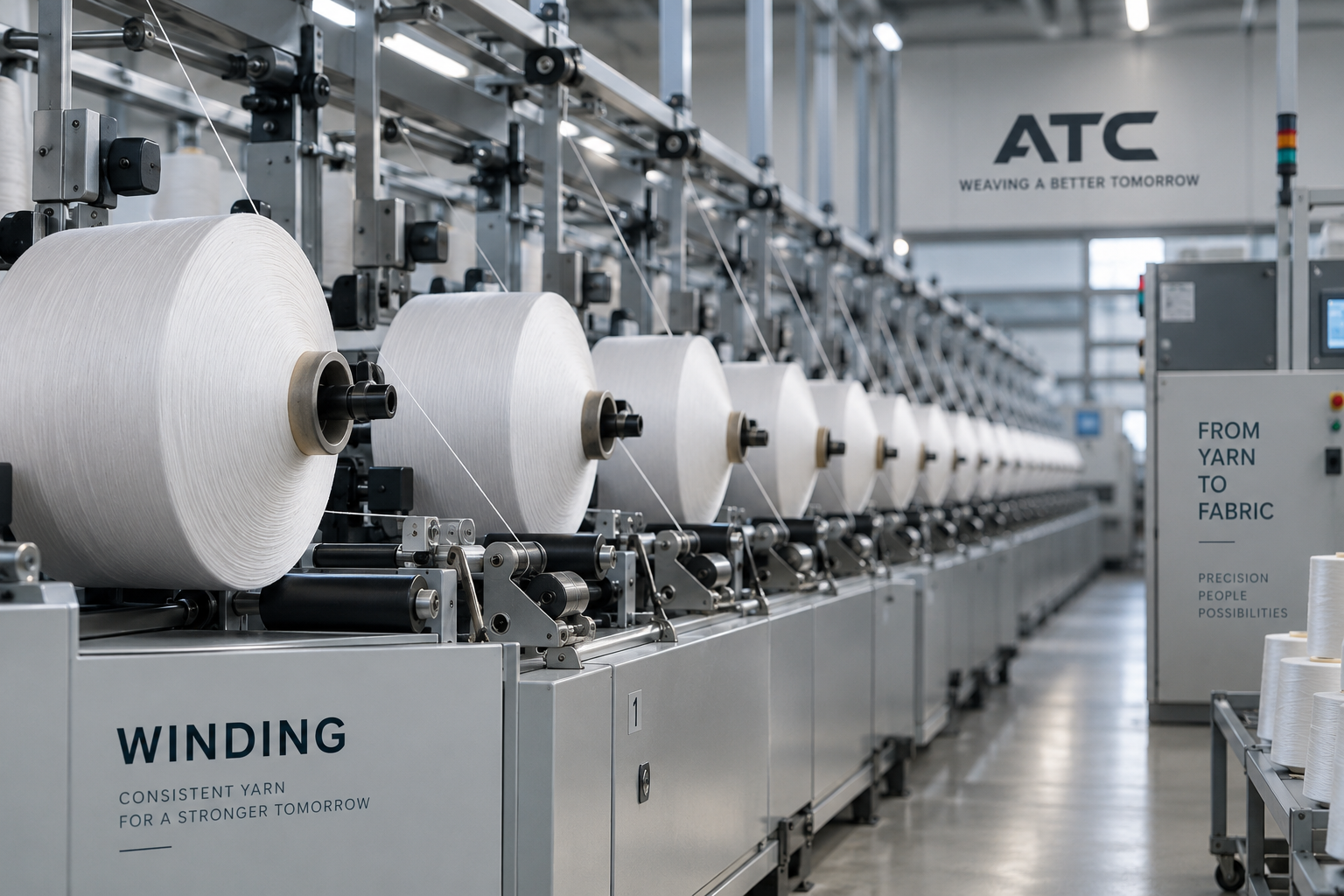
Warping is the process of preparing the warp for weaving.
All the vertical threads that will form the fabric — in some cases up to 16,000 individual threads — are arranged next to one another according to the required fabric structure.
The yarn cones are positioned on a frame known as the creel. From there, the threads are wound onto a large steel cylinder and subsequently transferred to the warp beam, which is then loaded onto the loom.
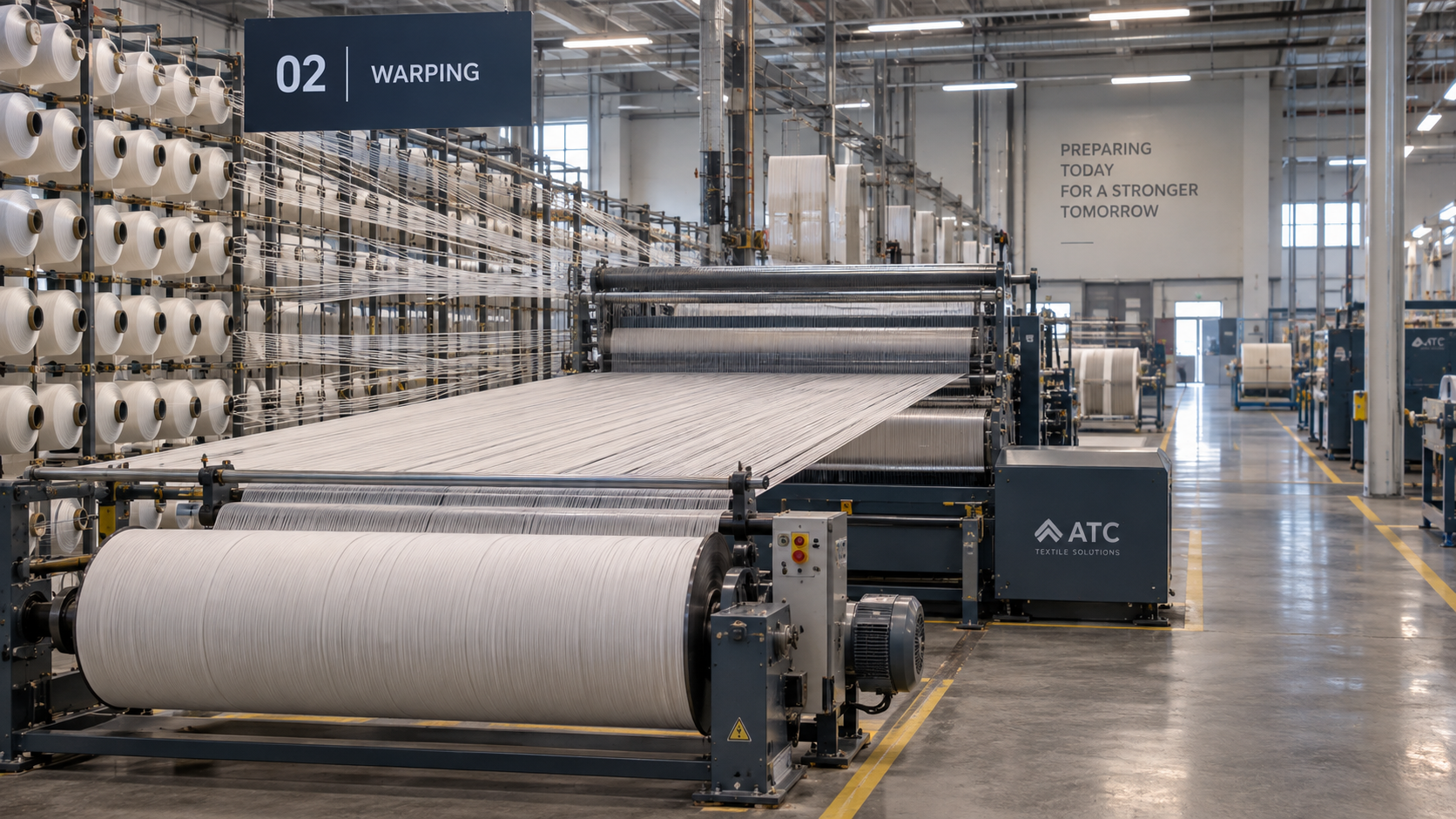
Sizing strengthens fine single yarns and prepares them to withstand the mechanical stresses of weaving.
While two-fold yarns consist of two or more threads twisted together, single yarns can be considerably more delicate. During sizing, the warp threads pass through a bath containing a sizing agent that strengthens and stabilizes them.
After drying, the individual yarns are carefully separated to prevent problems during weaving. Approximately 40 metres of warp can be sized per minute.
Drawing-in prepares each individual warp thread for the specific structure of the fabric, such as Oxford or poplin.
Each thread must move in a precise sequence and is therefore guided through the warp-stop elements, the eyes of the heddles and the teeth of the reed.
When successive fabrics use the same structure, the complete drawing-in process may be avoided by tying the new warp threads directly to the corresponding threads already positioned on the loom.
Modern technology makes it possible to draw in up to 200 threads per minute. Even with this high level of automation, drawing in a complete beam can require approximately 2.5 hours.
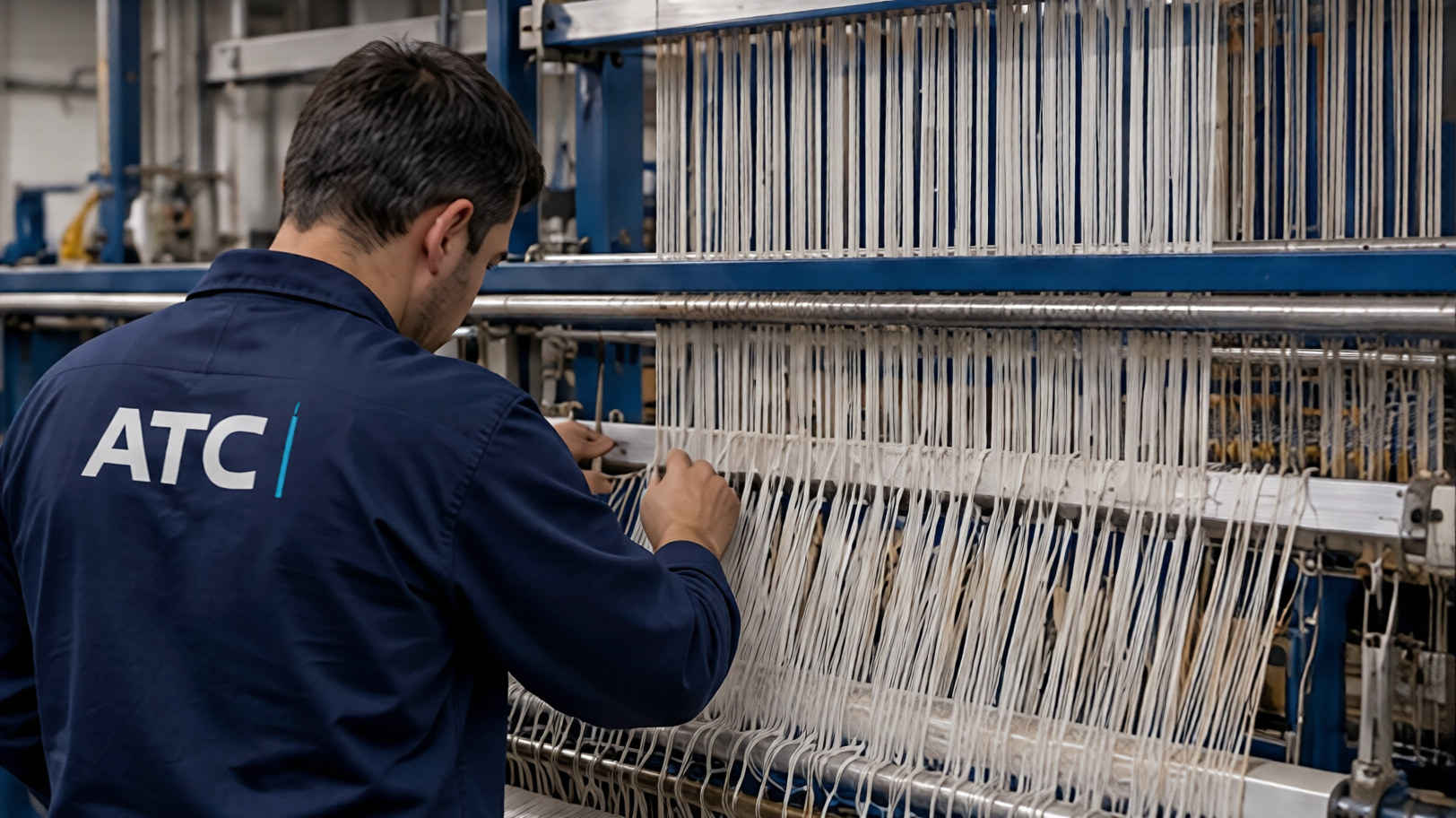
Weaving is the stage in which the weft yarn crosses the warp yarns and the fabric itself is formed.
The process takes place on advanced weaving looms in a controlled production environment and combines modern technology with the experience of skilled weaving personnel.
For simpler fabric constructions, the looms can operate at up to 640 passes per minute, while finer and more delicate fabrics require considerably slower production speeds.
At this stage, the unfinished fabric is known as greige fabric.
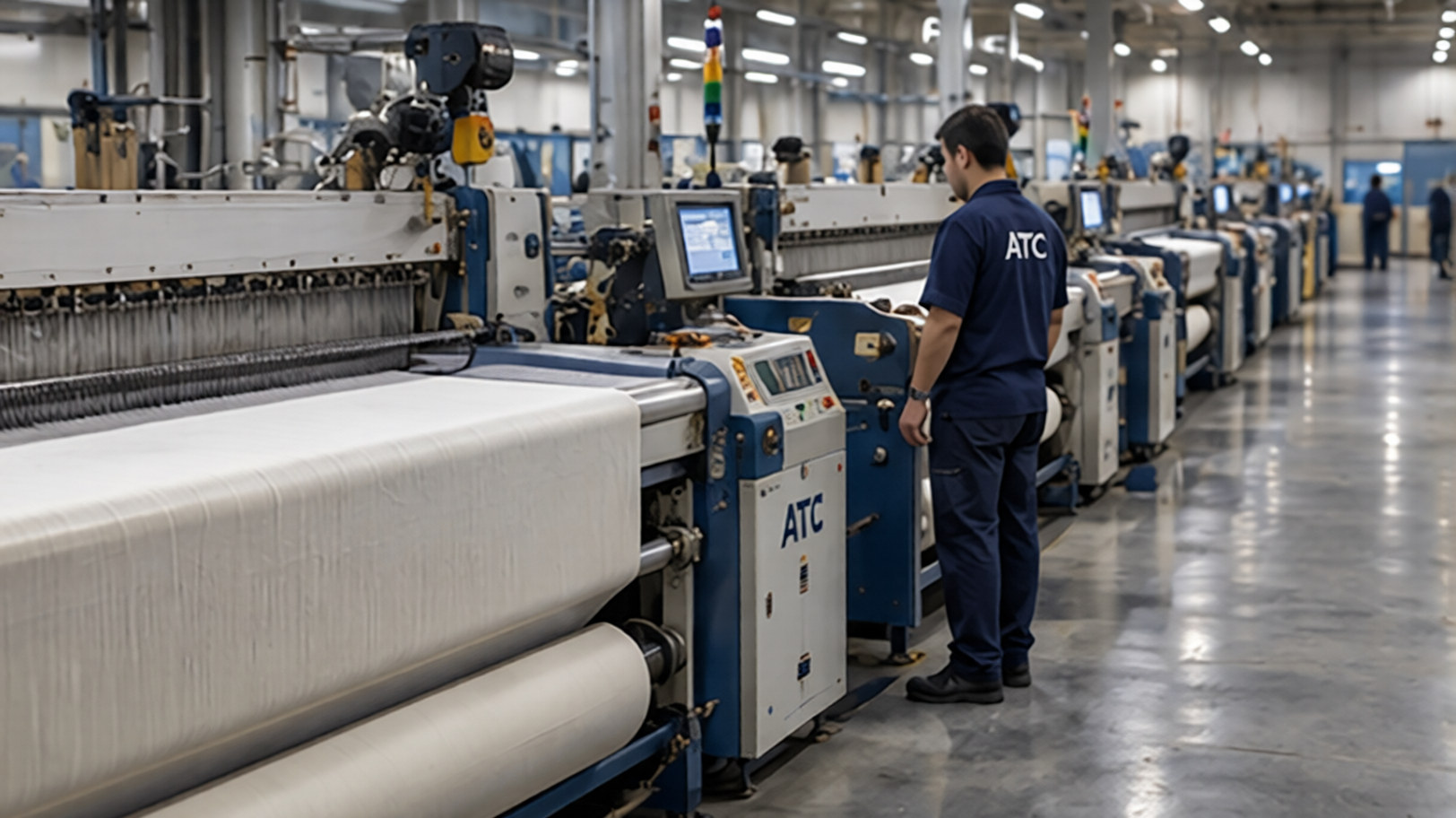
Every metre of fabric undergoes quality inspection at two key stages of production:
After weaving — greige fabric inspection in the Weaving Area.
After finishing — final fabric inspection in the Finishing Area.
Visual inspection allows small defects to be identified and corrected before the fabric proceeds to the next stage.
Skilled personnel remain an essential part of quality control. The experience of the inspectors, combined with modern technology and the periodic renewal of production equipment, enables ATC to maintain consistently high fabric-quality standards.
After greige inspection, the fabric is transferred to the Finishing Area, where it receives its final colour, hand-feel and visual appearance.